




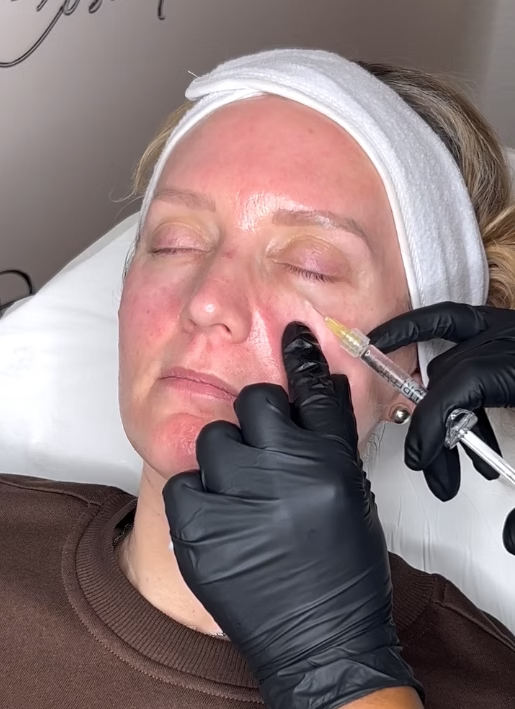
Baby Botox Australia: The Subtle Approach to Natural-Looking Results The “frozen forehead” look that defined cosmetic injectables for much of the 2010s is well and truly out of fashion. In its place, a more restrained, precision-led technique has taken over as the most requested approach in clinics across Australia: Baby Botox. Rather than aiming to eliminate every trace of movement, Baby Botox is about doing just enough to look refreshed, while still looking like yourself. Baby Botox Australia What Is Baby Botox? Despite the name, Baby Botox has nothing to do with treating babies. It’s a technique, not a different product. Baby Botox, also called micro Botox or micro-dosing, uses the same TGA-approved botulinum toxin type A products as standard Botox treatments (Botox®, Dysport®, and other approved brands). The difference lies entirely in dosage and precision: smaller amounts of product are injected across more targeted points, gently relaxing a muscle rather than switching it off completely. Where a traditional treatment might use a higher unit count to soften deep, established lines, Baby Botox typically uses a fraction of that, often described as one-third to one-half of a standard dose, spread more strategically across the treatment area. Baby Botox Australia How Baby Botox Works The underlying mechanism is identical to standard Botox: the toxin blocks nerve signals that tell facial muscles to contract, which reduces the repetitive movement that causes wrinkles to form and deepen over time. The difference is intensity. Instead of fully blocking a muscle, Baby Botox partially relaxes it, enough to soften fine lines and slow the formation of new ones, without erasing the ability to frown, smile, or raise an eyebrow. Baby Botox Australia This is why the technique demands a highly skilled injector. With less product to work with and more precise placement required, there’s a smaller margin for error than with standard dosing; getting a natural result depends heavily on the practitioner’s understanding of individual facial anatomy and movement patterns. Baby Botox Australia Why Baby Botox Has Gained Ground in Australia 1. A cultural shift away from the “overdone” look. Years of highly visible, heavily treated celebrity faces created a strong backlash. Australians researching cosmetic injectables today are more visually literate than ever; many can spot an over-treated result instantly, and most say they want to look rested and refreshed, not visibly “done.” 2. Prevention has overtaken correction as the primary motivation. Many patients, particularly those in their late 20s and 30s, are choosing Baby Botox before deep, static lines have formed, using light, targeted treatment to slow the muscle movement that causes wrinkles to etch in over time. 3. A gentler entry point for first-timers. For people who are curious about injectables but hesitant to commit to a dramatic result, Baby Botox offers a lower-commitment way to trial the treatment. It’s frequently used as a stepping stone before considering standard dosing. 4. Social and video visibility. Increased time spent on video calls, high-definition front cameras, and social platforms has made people more conscious of subtle changes in their own face, while also making an obviously “frozen” appearance far more noticeable and far less desirable. 5. It pairs naturally with a broader preventative skincare mindset. Baby Botox tends to sit alongside, rather than replace, a wider routine of sun protection, retinoids, and skin-health treatments, fitting the general shift toward proactive, maintenance-based aesthetics rather than reactive fixes. Who Is Baby Botox Suited To? Baby Botox tends to suit people who: It’s worth noting that if you don’t yet have visible dynamic lines, even a microdose may offer limited benefit; a proper consultation should always come before committing to treatment, and an experienced provider will be upfront if it isn’t the right fit for your skin. Baby Botox Australia What to Expect: Cost, Duration, and Results Timeline In Australia, cosmetic injectable treatments are typically charged per treatment area (for example, the frown/glabella area, forehead, or crow’s feet, each counted separately), and pricing commonly falls in the $200–$400 per area range, though this varies by clinic, practitioner experience, and city. Baby Botox Australia A general results timeline looks like this: Because smaller doses wear off faster than a full-strength treatment, Baby Botox generally requires more frequent top-ups than standard Botox, something worth factoring into your budget and calendar if you’re considering ongoing treatment. Regulation and Safety in Australia Baby Botox is still Botox, which means it carries the same regulatory status and safety considerations as any other botulinum toxin treatment in Australia: Choosing an AHPRA-registered provider using a verifiably TGA-approved product remains the single most important safety decision in any Botox or Baby Botox treatment. The Bottom Line Baby Botox reflects where cosmetic injectables have landed in 2026: subtlety over transformation, prevention over correction, and natural movement over a frozen finish. It’s not a different drug or a gimmick; it’s the same well-established, TGA-regulated treatment, applied with more restraint and more precision. Done well, by a properly qualified and registered practitioner, it can deliver exactly what most people are actually looking for: looking like a well-rested version of themselves.
Botox treatment Australia
Botox treatment Australia: What Does Botox Do? A Complete Guide Botox treatment Australia: Botox is one of the most recognised names in cosmetic and therapeutic medicine, yet it’s also one of the most misunderstood. Many people know it as “the wrinkle injection,” but its mechanism of action, regulatory status, and range of uses go far beyond smoothing frown lines. This guide breaks down what Botox actually is, how it works in the body, what it’s used for, and what the rules around it look like in Australia. What Is Botox, Exactly? Botox is a brand name for botulinum toxin type A, a purified neurotoxin produced by the bacterium Clostridium botulinum. In large, uncontrolled doses, botulinum toxin is dangerous — it’s the same toxin responsible for botulism. In the tiny, precisely measured doses used in medicine, however, it has been safely administered for therapeutic and cosmetic purposes for decades. Botox treatment Australia Botox is one of several commercial botulinum toxin type A products; others sold and TGA-approved in Australia include Dysport and, more recently, newer entrants to the market such as Relfydess. All of them work on the same underlying principle, though formulation, dosing units, and duration of effect can vary between brands. How Botox Works Botox works by temporarily blocking nerve signals to the muscles it’s injected into. Normally, nerves release a chemical messenger called acetylcholine, which tells muscle fibres to contract. Botulinum toxin blocks the release of acetylcholine at the injection site, which means the targeted muscle can no longer receive the signal to contract. The practical effect depends on where it’s injected: The effect is not permanent. Nerve signalling gradually returns as the body forms new nerve endings, which is why Botox results typically last three to six months before muscle activity resumes and treatment needs to be repeated. What Botox Is Used For Cosmetic uses Medical/therapeutic uses Botox has TGA-approved indications well beyond cosmetics, including: This dual identity, therapeutic drug and cosmetic treatment, is exactly why it’s classified and regulated the way it is. Botox Regulation in Australia: What You Need to Know Australia treats botulinum toxin products seriously, and for good reason — this is a potent prescription medicine, not a beauty product you can buy over the counter. Risks and Side Effects Botox is generally considered safe when administered correctly by a qualified, registered practitioner using a genuine, TGA-approved product. That said, it isn’t risk-free: Choosing a properly registered practitioner and a legitimately sourced, TGA-approved product significantly reduces these risks — most serious adverse events reported in Australia have been linked to unregistered providers or counterfeit products. Why Botox Has Stayed So Popular Botox’s enduring popularity comes down to a combination of factors: it’s minimally invasive, requires no downtime, delivers visible and predictable results, and, because the effect is temporary, carries less commitment anxiety than permanent procedures. As non-surgical aesthetic treatments continue to grow in accessibility and social acceptance across Australia, botulinum toxin remains the benchmark treatment against which newer injectables and devices are measured. Botox treatment Australia The Bottom Line Botox is a prescription-only medicine with a genuinely dual identity: a well-studied therapeutic drug for conditions like migraines and muscle disorders, and one of the most requested treatments in cosmetic medicine. Its safety profile is well established when it’s prescribed, sourced, and administered correctly, but because it’s a potent neurotoxin, that “correctly” matters enormously. Anyone considering treatment should confirm their practitioner is AHPRA-registered and using a genuine, TGA-approved product. Botox treatment Australia
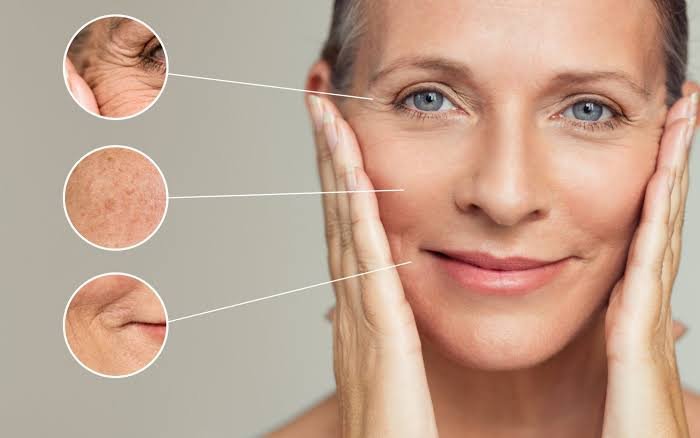
Anti-ageing Treatments
Why Anti-Ageing Treatment Has Become the Defining Trend of Modern Aesthetics For decades, anti-ageing treatments were something people simply tried to hide once it had already happened. Today, the conversation has shifted entirely. Anti-ageing is no longer a reactive fix reached for in a moment of panic over a new wrinkle; it has become a proactive, science-driven category of skincare and aesthetic medicine that spans everyday consumers, clinics, and researchers alike. What was once a niche corner of the beauty industry is now one of the fastest-growing segments in global healthcare and cosmetics. A Market That Reflects a Cultural Shift The numbers tell a clear story. Industry analysts place the global anti-ageing market at roughly USD 80–91 billion in 2026, with most forecasts pointing toward well over USD 130 billion by the mid-2030s, growing at a compound annual rate between 5.5% and nearly 9% depending on how the category is defined. Growth isn’t confined to any one region either; North America currently holds the largest share of the market, while the Asia-Pacific region is expanding at the fastest pace as rising disposable income and beauty-conscious consumer cultures accelerate adoption. Anti-ageing treatments What’s driving this isn’t vanity in isolation. It reflects a genuine shift in how people think about health, longevity, and self-care as interconnected goals rather than separate pursuits. Anti-ageing treatments Why So Many People Are Turning to Anti-Ageing Treatments 1. Prevention has replaced correction as the dominant mindset. A generation ago, anti-ageing products were something people reached for once fine lines had already appeared. Now, the average age at which people start using anti-ageing treatments products has dropped significantly; many younger consumers begin in their mid-20s, well before visible signs of ageing emerge. The logic has flipped: maintain skin quality early, rather than repair it later. 2. Non-invasive and minimally invasive options have lowered the barrier to entry. Injectables, energy-based devices (laser, radiofrequency, ultrasound), and advanced topical actives now offer visible results without the downtime, cost, or risk associated with surgical procedures. This shift toward “lunchtime procedures” has made aesthetic treatment accessible to a much broader demographic, not just those willing to undergo surgery. Anti-ageing treatments 3. Longevity science has merged with aesthetics. The line between “looking younger” and “ageing well biologically” is blurring. Emerging research into biomarkers like telomere length, inflammation, and epigenetic ageing clocks is informing product development and treatment protocols, giving anti-ageing a more clinical, evidence-based credibility than it had in previous decades. 4. Social media and digital visibility have changed self-perception. Constant exposure to filtered, curated images — combined with the sheer amount of time people now spend on video calls and camera-facing platforms — has heightened awareness of one’s own appearance in a way earlier generations didn’t experience. This has normalised conversations about skin health and aesthetic treatment that were once considered taboo. Anti-ageing treatments 5. Rising disposable income and treatment accessibility. As dermatology clinics and medical spas expand their footprint globally, aesthetic treatments that were once exclusive to major cities or high-income consumers are becoming available in more markets, at a wider range of price points. Anti-ageing treatments 6. An ageing global population with more purchasing power. The share of people aged 65 and older continues to climb worldwide, and this demographic increasingly has both the means and the motivation to invest in appearance-maintenance and healthy-ageing solutions — sustaining long-term demand well beyond any single trend cycle. Anti-ageing treatments What This Means for the Supply Chain As demand accelerates across topical actives, injectables, and device-based treatments, the pressure moves upstream, toward the raw materials, reference standards, and formulation inputs that clinics, laboratories, and manufacturers rely on to develop and validate these products. Reliable sourcing, accurate documentation (such as Certificates of Analysis), and consistent quality control have become just as important to the anti-ageing boom as the treatments themselves. B2B buyers in this space are increasingly prioritising suppliers who can provide transparency, batch consistency, and proper regulatory documentation, not just competitive pricing. Anti-ageing treatments Anti-Ageing Treatment The Road Ahead Anti-ageing is no longer a fringe category chasing quick fixes. It’s a mature, research-backed industry shaped by demographic shifts, technological innovation, and a broader cultural redefinition of what it means to age well. For businesses operating in the raw materials and research chemical supply space, this growth represents sustained, long-term demand, not a passing trend. Anti-ageing treatments
Dermal fillers online Australia
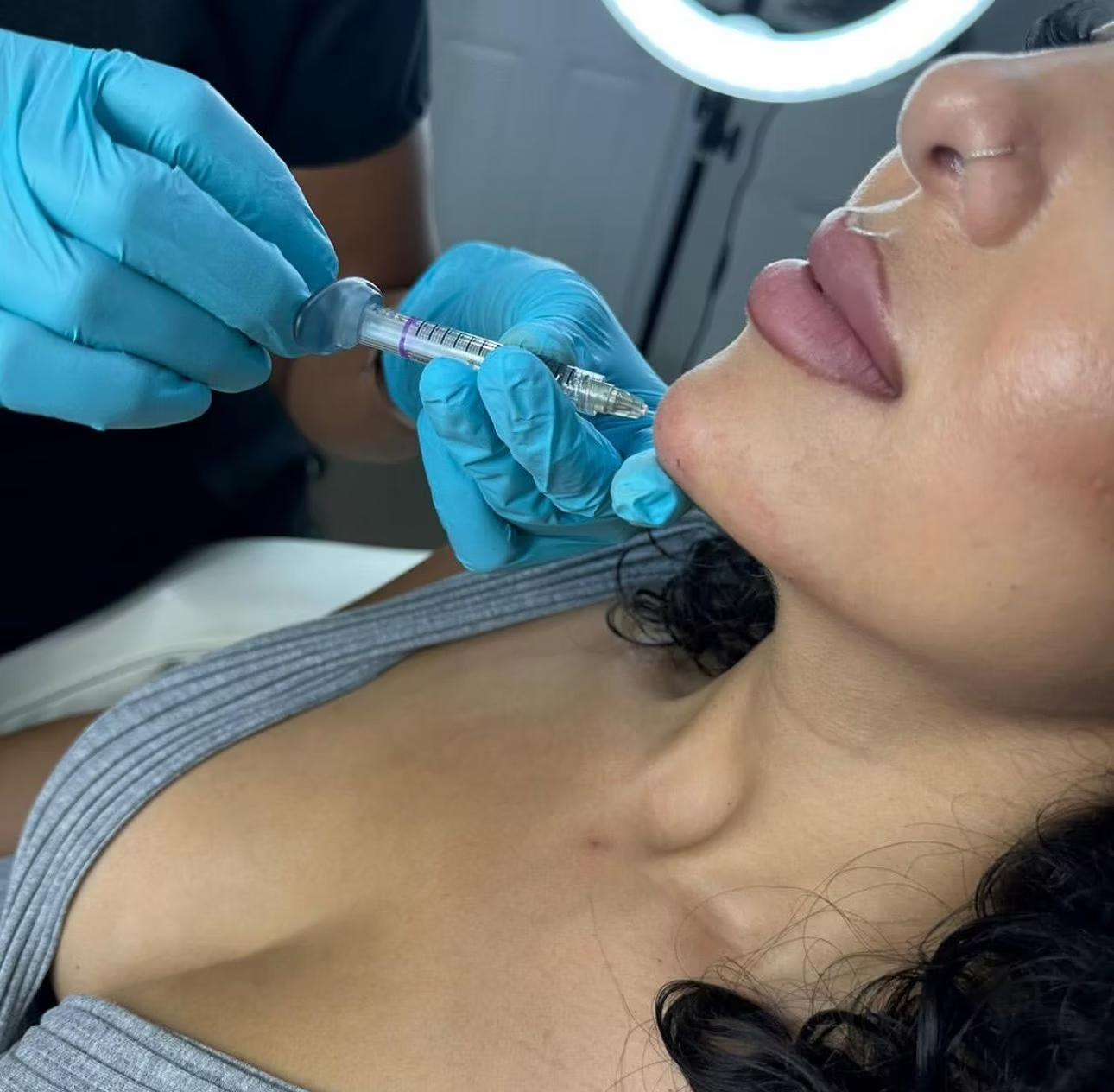
Dermal fillers have become one of Australia’s most popular non-surgical cosmetic treatments. They are commonly used to restore facial volume, soften wrinkles, enhance facial contours, and achieve a more youthful appearance. While many people are interested in the potential benefits of dermal fillers, it’s equally important to understand the risks, treatment process, and the importance of choosing a qualified healthcare professional. Buy dermal fillers online australia This guide explains what dermal fillers are, how they work, who may be a suitable candidate, and what Australians should know before considering treatment. Dermal fillers online Australia Dermal fillers are injectable medical products designed to add volume beneath the skin. Unlike anti-wrinkle injections, which relax muscles, dermal fillers work by filling areas that have lost volume or by enhancing natural facial features. Many commonly used dermal fillers contain hyaluronic acid, a substance naturally found in the body that helps maintain skin hydration and elasticity. Depending on the type of filler used and the treatment area, results may last from several months to over a year. Buy dermal fillers online australia Why Do People Choose Dermal Fillers? People seek dermal filler treatments for a variety of cosmetic reasons. Common goals include restoring age-related volume loss, improving facial symmetry, and enhancing natural features. Treatment areas may include: The treatment plan should always be tailored to the individual’s facial anatomy and aesthetic goals. Potential Benefits When performed by a qualified and experienced healthcare professional, dermal fillers may provide several cosmetic benefits, including: Dermal fillers online Australia Dermal fillers online Australia Restoring Facial Volume As we age, collagen, fat, and bone density naturally decrease. Dermal fillers can help restore lost volume and support facial contours. Smoothing Facial Lines Fillers may reduce the appearance of certain wrinkles and folds, creating a softer, refreshed appearance. Enhancing Facial Features Some individuals choose fillers to subtly enhance the lips, cheeks, chin, or jawline while maintaining natural facial proportions. Minimal Downtime Most treatments are performed in an outpatient setting and typically allow patients to resume normal daily activities shortly afterward, depending on their provider’s advice. Immediate Results Many patients notice visible improvements immediately after treatment, although mild swelling may temporarily affect the final appearance. Who May Be a Suitable Candidate? Dermal fillers are not appropriate for everyone. A consultation with a qualified healthcare professional is essential to determine whether treatment is suitable. Factors your provider may consider include: A thorough consultation allows for realistic expectations and informed decision-making. Buy dermal fillers online australia What Happens During Treatment? The procedure usually begins with a consultation and facial assessment. Your healthcare provider will discuss your goals, explain the available treatment options, and outline potential risks. During the procedure: Treatment times vary but are often completed within 30 to 60 minutes. Recovery and Aftercare Recovery is generally straightforward, although temporary side effects are common. Patients may experience: These effects usually improve over several days. Your healthcare provider may recommend: Always contact your healthcare provider if you experience severe pain, significant swelling, or any unusual symptoms. Dermal fillers online Australia Understanding the Risks Although dermal fillers are widely used, they are medical procedures that carry potential risks. Possible complications include: Choosing a qualified healthcare professional with appropriate training and experience is one of the most important ways to reduce these risks. Dermal fillers online Australia Choosing a Qualified Cosmetic Provider When considering dermal fillers, patients should research the qualifications and experience of the practitioner performing the procedure. Helpful questions include: Reputable providers will encourage questions and provide clear information before treatment. Australian Regulations In Australia, cosmetic injectable treatments are subject to strict regulatory requirements. Many injectable products used as dermal fillers are prescription-only medicines, and their use should occur within the appropriate medical framework. Patients should be cautious of treatments offered outside regulated healthcare settings or by individuals who are not appropriately qualified. Buy dermal fillers online australia Buy dermal fillers online australia Buy dermal fillers online australia Setting Realistic Expectations Dermal fillers can enhance facial appearance, but they cannot stop the natural ageing process. Results vary depending on: Maintaining realistic expectations and discussing desired outcomes with your healthcare provider can contribute to greater satisfaction. Frequently Asked Questions Are dermal fillers permanent? No. Most commonly used dermal fillers gradually break down over time and require maintenance treatments to sustain results. Are treatments painful? Many people describe the discomfort as mild. Some products contain local anaesthetic, and providers may use numbing cream to improve comfort. How long does swelling last? Mild swelling often improves within a few days, although recovery varies between individuals and treatment areas. Can fillers be reversed? Some hyaluronic acid fillers can be dissolved using an enzyme called hyaluronidase if medically appropriate. Your healthcare provider can explain whether this applies to your treatment. Final Thoughts Dermal fillers can provide subtle, natural-looking cosmetic enhancements when performed by qualified healthcare professionals. However, they are medical procedures that require careful assessment, informed consent, and appropriate aftercare. If you are considering dermal fillers in Australia, take time to research your provider, discuss your goals openly, and ensure you understand both the potential benefits and the possible risks. An informed approach can help you make confident decisions about your cosmetic care while prioritising your health and safety.